Tuesday, July 24, 2012

What's Worth a Win?

Too many pennies for a whistle
is what we all pay, you and I,
just for a little foolish pleasure.
Pay a price that's quite too high.
Edward Eggleston, "Too Much for the Whistle"


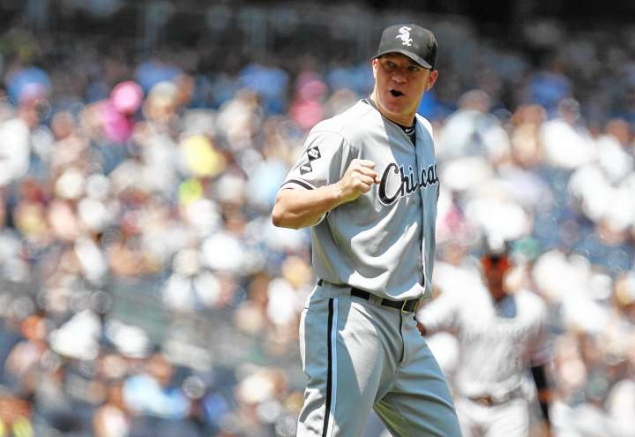
 Shopping at Sax's: Under Williams, trading for wins has come at a heavy cost. (Nam Huh/AP)


Any White Sox fan should have confidence that when it comes of acquiring wins, GM Ken Williams has brought in more than he's shipped out in his near-12 seasons running the club. But the GM's confidence and aggressiveness comes at a cost, most amusingly reflected in his tendency to chase players past prime simply because he loved them once (coming to the 2013 White Sox: Torii Hunter).


While Williams has brought in 125.2 WAR in trades and given up just 93.3, his cost per win is exceedingly high: The overall surplus value--the dollar value players produced, above player salary--that Williams has dealt away is $124.7 million, while getting back just $101.4 million.


The man brings in wins--but boy, he pays for them.


Surplus Value Wins: The Great Eight
On the WAR side of this study, Williams has done rather well, so these breakout lists were lopsided in his favor: Ten deals where the GM "won" a trade by 5.0 WAR or more, just five where he "lost" the trade by 5.0 WAR. On the value side, the script is flipped, so strap it down and enjoy this list while it lasts, Sox fans. 


1. December 6, 2006: White Sox acquire Gavin Floyd ($45.5 million) from the Philadelphia Phillies for Freddy Garcia (-$11.2).
Surplus Value$56.7 million
Put this highway robbery in perspective thusly: To date the White Sox have paid Floyd just $3.5 million more than Philadelphia gave to Garcia in 2007 alone--for just 58 innings and 11 starts.


2. December 23, 2006: White Sox acquire John Danks ($61.7 million) and Nick Masset (-$1.5 million) from the Texas Rangers for Brandon McCarthy ($5.1 million).
Surplus Value$55.1 million
Danks has provided greater value to the White Sox than Floyd, but given the brief debit of Masset and the fact that McCarthy offered some (hair-tearingly lesser) value to Texas, the lefty is just KW's second-best value trade. To date, Danks has also been paid more than $5 million more than Floyd.
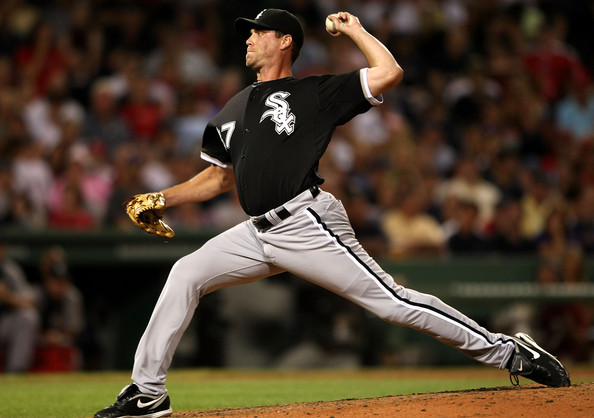
3. March 20, 2006: White Sox acquire Matt Thornton ($29.9 million) from the Seattle Mariners for Joe Borchard (-$700,000).
Surplus Value$30.6 million
With Thornton's salary catching up with (and likely surpassing) his WAR value, don't expect this deal to continue to pay surplus dividends to the White Sox. But a $30 million advantage is plenty, eh?

4. January 15, 2003: White Sox acquire Bartolo Colon ($6.6 million) from the Montreal Expos for Orlando Hernandez (-$4.1 million), Rocky Biddle (-$11.7 million) and Jeff Leifer (-$4 million).
Surplus Value$26.4 million
When you combine one strong season from Colon, two underperforming careers in Montreal for Biddle and Leifer, and Hernandez never suiting up for the Expos, you get an outrageous surplus trade in the White Sox's favor.

5. March 27, 2002: White Sox acquire Damaso Marte ($16.1 million) from the Pittsburgh Pirates.
Surplus Value$16.1 million
The deal steals drop dramatically after the top four, huh? Marte's WAR in four White Sox seasons topped $23 million, a value that his budding salary was unable to catch up with.

6. December 13, 2004: White Sox acquire Scott Podsednik ($6.3 million), Luis Vizcaino ($1.4 million) from the Milwaukee Brewers for Carlos Lee (-$6.9 million).
Surplus Value$14.6 million
Given what Scotty Pods did for the 2005 White Sox and Lee finding his salary in the process of catching up and passing his production value, this trade feels like it should rank even higher on the list. And while it can't be officially quantified, the savings created by cutting Lee loose allowed Williams to plug in other key cogs on the South Side, including Tadahito Iguchi. The spirit of this steal, then, does carry a higher value than $14.6 million.

7. December 2, 2003: White Sox acquire Juan Uribe ($8.5 million) from the Colorado Rockies forAaron Miles (-$2.3 million).
Surplus Value$10.8 million
Williams knew when to get out from under a weighty future contract for Uribe, keeping the sentimentality of 2005 in check by cutting him loose after the 2008 season. Friend of the Program Ned Coletti gets to overpay Uribe these days.

8. April 1, 2009: White Sox acquire Sergio Santos ($10.2 million) from the San Francisco Giants for future considerations.
Surplus Value: $10.2 million
This April Fools' steal by Williams is sort of unfair to include here, in that this was a courtesy swap on behalf of Santos and the White Sox. During spring training, Chicago brass told Santos he was not going to make it as a shortstop and was interested in trying him out as a pitcher. Santos was intrigued, but asked for one more shot as a hitter, so the White Sox obliged by sending Sergio west, with the condition that if he didn't make the Giants, Santos would come back to the South Side. Thus the most successful hitter-to-pitcher transition in White Sox history began; a year later, Santos led the White Sox bullpen with his scoreless April. 

The Bottom 12
This is going to be painful.

1. January 3, 2008: White Sox acquire Nick Swisher (-$5.9 million) from the Oakland A's for Gio Gonzalez ($31.1 million), Ryan Sweeney ($20.7 million) and Fautino de los Santos (-$800,000).
Surplus Value: -$56.9 million
This is the equivalent of the Danks or Floyd deals, now told from the victim's view of the story. The best thing to say about this debacle of a deal is that with Giovany and Ryan both out of Oakland, the ugly numbers are set in stone and can't get any worse for Williams.

2. December 13, 2001: White Sox acquire Todd Ritchie (-$4.7 million) from the Pittsburgh Pirates for Kip Wells ($25.7 million), Josh Fogg ($4.6 million) and Sean Lowe (-$300,000).
Surplus Value: -$34.7 million
Losing Wells was no major shake, but this early move is a typical in defining Williams to critics: A GM too willing to sacrifice low-cost, good-production talent for the sake of a big splash. The miscalculation here is that Ritchie's last (and only) measurably splashy season (3.1 WAR) came in 1999.

3. December 20, 2005: White Sox acquire Javier Vazquez ($10.1 million) from the Arizona Diamondbacks for Chris Young ($33.4 million), Orlando Hernandez (-$1.4 million) and Luis Vizcaino ($3.4 million)
Surplus Value: -$25.3 million
Critics can point to this as another deal that epitomizes Williams' weaknesses, namely dealing blue-chip prospects for overdone veterans. That applies for this deal only mildly, at best; Vazquez produced well for the White Sox and was turned over (in a relatively rare White Sox deal) in a modestly productive trade three years later. Young was no lock for stardom in the first place, and with his salary rapidly catching his value, the final value tally may tilt back toward a more reasonable loss before Young's time is done.

4. July 18, 2004: White Sox acquire Carl Everett (-$6.5 million) from the Montreal Expos for Jon Rauch ($13.3 million) and Gary Majewski (-1.0 million).
Surplus Value: -$18.8 million
The same sort of benefit that the White Sox gained from the year-to-year efficiency of Damaso Marte worked against them in surrendering Rauch. Also of note is Majewski, who was involved in seven separate transactions with Chicago, including being drafted in the second round in 1998, despite never pitching a single inning for the club.

5. July 31, 2009: White Sox acquire Jake Peavy (-$16.1 million) from the San Diego Padres for Clayton Richard ($3.0 million), Aaron Poreda (-$200,000) and Adam Russell (-$1.1 million).
Surplus Value: -$17.8 million
While the Vazquez-Young deal is a virtual WAR wash at this juncture, the Peavy megadeal four years later has clearly swung in Chicago's favor with Peavy's resurgence. This is seemingly the perfect win-win deal for Williams, where he gets the better end in the talent barter, but pays pretty dearly for the privilege.

6. November 6, 2009: White Sox acquire $1.5 million and Mark Teahen (-$14.2 million) from the Kansas City Royals for Chris Getz ($3.6 million) and Josh Fields ($800,000).
Surplus Value: -$17.1 million
It wasn't a bad idea to deal for Teahen; to have immediately extended his contract, sight unseen, represented Williams at his Christmas-morning worst. When the only celebration a subsequent trade (Teahen and Edwin Jackson to Toronto at last year's trade deadline) is that it helps remove a commitment off of the books, this awful trade could leave a bad taste for years to come.

Bajenaru, the Mesmerizer
7. March 8, 2006: White Sox acquire Alex Cintron (-$14 million) from the Arizona Diamondbacks for Jeff Bajenaru (-$1.2 million).
Surplus Value: -$12.8 million
OK, so Williams wasn't quite perfect in 2006. Here's how to sum up this swap of awful players, by way of explaining how this afterthought is marked as the seventh-worst value deal of Williams' tenure: the Snakes had the sense to pitch Bajenaru for just one inning, while KW allowed Cintron to be a subpar member of not just one but two White Sox teams.

8. July 6, 2003: White Sox trade D'Angelo Jimenez ($12.1 million) to the Cincinnati Reds.
Surplus Value: -$12.1 million
In exchange for the useful Jimenez the White Sox took back Scott Dunn, who never pitched for the team. He in fact was flipped three weeks later to the Angels for Scott Schowenweiss--another (albeit less painful) bad trade.

9. December 4, 2008: White Sox acquire Brent Lillibridge ($2 million) and Tyler Flowers ($2 million) from the Atlanta Braves for Javier Vazquez ($16.9 million) and Boone Logan (-$1.4 million).
Surplus Value: -$11.5 million
Vazquez's faltering down the playoff stretch in 2008 put him on the block in spite of fine overall value and production in Chicago; Williams could hardly be faulted for failing to foresee a Cy Young quality effort upon the righty's return to the NL. This is somewhat of a win-win deal, in that two valuable pieces came back to the White Sox in return; swapping Lilli to Boston in the Kevin Youkilis deal seems like the move all fans will look back at fondly if the South Siders reach the 2012 postseason.

10. November 13, 2008: White Sox acquire Wilson Benemit (-$4 million), Johnny Nunez (-$600,000) and Jeffrey Marquez (-$600,000) from the New York Yankees for Nick Swisher ($6 million).
Surplus Value: -$11.2 million
Is $10 million the right price for pest control?

Chair, aloft.
11. July 1, 2003: White Sox acquire Carl Everett ($800,000) from the Texas Rangers for two players to be named later: Frank Francisco ($11.1 million) and Josh Rupe ($600,000).
Surplus Value: -$10.9 million
One man; two bad trades. Ah, the fickle nature of the PTBNL. Who knows how many other names were bandied about in exchange for Everett Mach 1. But Texas settling for (or demanding, or picking out of a hat) Francisco as one of the minor throw-ins would haunt Chicago for more than five seasons of Frankie throwing strikes and tossing chairs in Texas. Perhaps this was a case of easy-come, easy-go, as KW had picked up Francisco from Boston for the deadline booby prize of Bobby Howry just one year earlier. 

12. December 3, 2002: White Sox acquire Billy Koch (-$10.2 million) and player to be named later Neal Cotts ($3 million) from the Oakland A's for Keith Foulke ($3.5 million), Mark Johnson (-$1 million), and $1 million.
Surplus Value: $10.7 million
Much like the Santos acquisition was a bit of a wink-wink addition to the great eight trades above, the Koch deal is tough to beat Williams up on given the uniquely tragic nature of the closer's career-ending illness (Morgellons, a fatiguing, slow-healing disease marked by bugs and worms popping out of the skin, infected his entire family.) Foulke was destined to end one Sox's long World Series drought, but it was to be Boston's in 2004, not Chicago's in 2005.

Part Three: The free agent free-for-all.
Part Four: Who bullies Ken? (A study of GMs)
Part Five: What-ifs, and other trade miscellany.

Fine print: In many cases, exact details of cash considerations are unavailable, so educated guesses were made. Some player-for-considerations deals have been skipped or omitted. WAR data came only from Baseball-Reference, while yearly dollar/WAR values were estimated primarily from Fangraphs data. Players included in trades who never contributed at the major league level are not listed.


Monday, July 23, 2012

Canary, Inserted


And even stealing apples from the cart
's a vital task that needs to be performed
by someone who knows how.  You take too little
and people will forget to stretch their minds,
too much, and they might snap.  They need us there
to test the limits and to go too far
but not too much too far.  When that’s not done
the cities lose their elasticity,
get brittle.  Hard.  Develop tiny cracks
where mildew can get in, and bring decay,
and so the cities rot-for we are gone.
David Sklar, “The Decline of the Beat Poets”


Canary, Inserted: When it comes to WAR, Williams
has consistently vanquished his peers. (Nam Huh/AP)
There's a common perception about White Sox GM Ken Williams, that he is stubborn and old-school, winning a World Series in 2005 by picking up a quarter and pulling a jackpot winner on a slot machine. Because, after all, Jerry Krause didn't draft Michael Jordan, either...


Williams could give a damn about perception. He's clever enough to know that as these lines are written in defense and/or explanation of the man and dozens of others are typing their poisons his way, he's readying his own image and ficitions and counter-perceptions--just as anyone would when sitting at the poker table that is that last week before baseball's trade deadline. 


My own image of Williams, before examining the numbers more carefully, was as the consummate canary-eating cat, a fella who tolerated, even perpetuated, his own know-nothing stewardship of the White Sox while picking your pocket--or threatening persuasively enough to have you hand it over.


Over 12 years as GM, Williams has brought in more White Sox wins than he's dealt away, but often at an enormous cost. (And no, that cost doesn't come in acknowledgement of the ninnied hand-wringers who mew over the cost of losing those so-called "farm" players, the plurality of whom never sniff a tub of big-league ranch-dusted sunflower seeds.) As much as he often comically cries poor as the GM of a major-market ballclub with a healthy budget, blame sits dead at his own feet, for it's usually an overzealous move of his own that has pinched the budget enough to begin poormouthing.

But this first in a series focuses on sheer victories, and while it may not always be pretty, the GM does pull in the wins.

The Dirty Digits
In his tenure, Williams has traded 134 White Sox players and acquired 120.

He's traded away 135.3 player seasons, getting back 126.

He has traded away 93.3 WAR and received 125.2.

The dollar value of the WAR he's traded away is $337.5 million, getting back a WAR value of $495.6 million.

Williams has traded away players would go on to earn $222.9 million in salary, while paying the players he's acquired $346.4 million.

Williams has included $13.9 million in cash considerations over 17 of his trades, while getting back $47.8 million in 14 deals for the White Sox.

The overall surplus value--the dollar value players produced, above player salary--that Williams has dealt away is $124.7 million, while getting back $101.4 million.

WAR Trade Wins: The Top 10
Tomorrow, the paltry value return in value Williams has received during his GM tenure will be examined. Today, it's the brighter news, focusing on Williams' many WAR steals.

1. December 23, 2006: White Sox acquire John Danks (18.3 WAR) and Nick Masset (-0.2) from the Texas Rangers for Brandon McCarthy (1.5).
Net WAR: 16.6.
From the looking glass of 2012 the notion of swapping Danks for McCarthy might seem less outrageous. In fact, back in 2006 Williams was criticized for being a bit hasty in dropping one of the unsung heroes of 2005 simply because of his nightlifing bromance with Brian Anderson. No matter, as Danks almost immediately began producing for the White Sox. McCarthy paid dividends not for the Rangers, but for the Oakland A's (3.3 WAR), who signed him as a free agent in 2011.

2. December 6, 2006: White Sox acquire Gavin Floyd (14.4 WAR) from the Philadelphia Phillies for Freddy Garcia (-0.3).
Net WAR: 14.7.
The front end of Williams' brilliant December 2006 dealing streak came in moving the workhorse Garcia with his stock sky-high (a 17-9, 3.6-WAR year for the 90-win White Sox). Floyd was a borderline bust who couldn't stop throwing gopher balls (seven career wins, and an ERA or nearly 7.00 over parts of three seasons). Garcia turned out to be on the cusp of shoulder surgery and would win just a single game for the Phillies, while pitching maestro Don Cooper coaxed almost all of the first-rounder promise back out of Floyd.

3. July 31, 2004: White Sox acquire Jose Contreras (8.7 WAR) from the New York Yankees for Esteban Loaiza (-1.1).
Net WAR: 9.8.
Williams proved he wasn't needlessly attached to even his most surprising finds by dumping Loaiza in the Bronx. The GM had picked the righty off the scrap heap in 2003, and Loaiza reciprocated with 7.7 WAR and an All-Star start in just a season and a half in Chicago. Contreras would give the White Sox the best seasons of his career and was the team's ace for the team's best stretch of Williams' tenure (2005-06). Like Garcia, Loaiza would win just one game with his new club.

4. March 20, 2006: White Sox acquire Matt Thornton (9.4 WAR) from the Seattle Mariners for Joe Borchard (-0.1).
Net WAR: 9.5.
The 2006 calendar year proved to be Williams' best on the job. This late spring training deal was an apparent no-risk move for both clubs, swapping bonus-baby busts. But in a true test of Cooper's skill and Thornton's determination, the lefthander quickly became one of the most dangerous late men in baseball, while Borchard didn't pan out and was dumped on the Florida Marlins a month later.

5. January 15, 2003: White Sox acquire Bartolo Colon (4.8 WAR) from the Montreal Expos for Orlando Hernandez (0.0), Rocky Biddle (-2.9) and Jeff Leifer (-1.2).
Net WAR: 8.9.
Williams and Omar Minaya have made more than one trade together, but none worked out better for the White Sox than this. Hernandez, the linchpin of the deal for the Expos, missed the 2003 season. Colon produced just one great year for the White Sox, going 15-13 with a 3.87 ERA and nine complete games, but this stellar deal was secured by the utter horribleness of Leifer and Biddle north of the border.

6. March 27, 2002: White Sox acquire Damaso Marte (7.7 WAR) from the Pittsburgh Pirates.
Net WAR: 7.7.
Marte never got much due on the South Side, but he averaged nearly 2.0 WAR per season for the White Sox. Matt Guerrier (who Chicago sent east) would later turn into a pain in the Chisox's hiney as a member of the Minnesota Twins (2.66 ERA over 51 games), but he never played for the Pirates.

7. June 27, 2004: White Sox acquire Freddy Garcia (8.4 WAR) and Ben Davis (-0.1) from the Seattle Mariners for Jeremy Reed (2.2 WAR), Miguel Olivo (-1.2) and Mike Morse (-0.2).
Net WAR: 7.5.
It may be hard to believe, but if you pair this deal with the Thornton swap in 2006, it makes two utter fleecings of M's GM Bill Bavasi. He's relatively blameless on this one, at least in that Reed and Olivo were highly-touted but never panned out in Seattle.

8. December 2, 2003: White Sox acquire Juan Uribe (6.0 WAR) from the Colorado Rockies for Aaron Miles (-0.5 WAR).
Net WAR: 6.5.
Without this deal, the 2005 World Series win wouldn't have happened--at least not with the spectacular finish the round mound of infield defense provided. Miles would amass just a net of just 0.1 WAR over his nine major-league seasons.


9. July 31, 2009: White Sox acquire Jake Peavy (7.2 WAR) from the San Diego Padres for Clayton Richard (1.3), Aaron Poreda (0.0) and Adam Russell (-0.1).
Net WAR: 6.0.
Williams' brashest "all-in" move has been met with only gradual success, after several Peavy injuries initially made this look like an all-out bust for the South Siders. Richard has plateaued after a fast start in San Diego, while Peavy has downright hornswaggled the role of ace from any takers on the 2012 White Sox.


10. November 26, 2005: White Sox acquire Jim Thome (10.9 WAR) from the Philadelphia Phillies for Aaron Rowand (5.1).
Net WAR: 5.8.
Unpopular, thy name is the Rowand trade. But while the Resierish centerfielder produced nicely in Philly, he had just two seasons there before fleeing for free agent riches in San Francisco. If you think of Thome as a limited player who could only slug, consider that in just less than four seasons on the South Side, he busted out nearly 11 WAR; in approximately half that time, Adam Dunn is WARing at -2.3 and will be lucky to get to 0.0 before his tenure is through.

The Bottom 5
There were exactly 10 trades that produced a profit of at least 5.0 WAR for the White Sox, and there are just five that do the same in reverse. Brace yourselves.

1. January 3, 2008: White Sox acquire Nick Swisher (-0.5 WAR) from the Oakland A's for Gio Gonzalez (8.1), Ryan Sweeney (5.3) and Fautino de los Santos (-0.1).
Net WAR: -13.8
Swisher sounded good at the time, didn't he? But the combination of playing him in center field and batting leadoff made for rough early going. Dirty 33 didn't take the adjustments well, and his bristling soon wore on Ozzie Guillen, who doesn't leave a corpse behind if he decides he dislikes you. Gonzalez and Sweeney both blossomed into stellar products of the maligned White Sox system--currently starring in other cities.

2. December 13, 2001: White Sox acquire Todd Ritchie (-1.8 WAR) from the Pittsburgh Pirates for Kip Wells (7.9), Josh Fogg (1.4) and Sean Lowe (-0.1).
Net WAR: -11.0
More than a year into the job, Williams still hadn't made a single strong deal. This one, questionable at the time, was his worst yet. Ritchie faltered so badly in his single, disastrous South Side season that he was gone from baseball just two years and nine games later, at the age of 32.

3. November 13, 2008: White Sox acquire Wilson Benemit (-0.6 WAR), Johnny Nunez (-0.1) and Jeffrey Marquez (-0.1) from the New York Yankees for Nick Swisher (7.6).
Net WAR: -8.4
The inevitable make-up deal, done primarily to appease Guillen and some of the clubhouse grousers who didn't much care for Swish's antics, was nearly worse than the original acquisition, made just 10 months earlier. We'll call it Cashman's Revenge, for the fleecing of Jose Contreras Williams committed some four years earlier.

4. July 6, 2003: White Sox trade D'Angelo Jimenez (5.2 WAR) to the Cincinnati Reds.
Net WAR: -5.2
It's probably a good sign when the fourth-worst WAR deal made in 12 years by a GM is a giveaway of a guy you likely don't remember. Jimenez had been plucked from the Padres a year earlier but was flipped to Cincy for Scott Dunn, who never played for the White Sox.

5. July 18, 2004: White Sox acquire Carl Everett (-0.3 WAR) from the Montreal Expos for Jon Rauch (5.1 WAR) and Gary Majewski (-0.3 WAR).
Net WAR: 5.1
You may recall Rauch as merely a boorish, tattooed dude, but there was a time he was a lurchingly failed prospect with the White Sox. Dealing him to Montreal seemed a safe bet for all concerned, even if it meant importing the Looney Tune who is Carl Everett. Everett didn't contribute much to the aborted playoff run of 2004, while Rauch found major league success with the Expos and Nats in spite of himself.

Part Two: The bad news...the enormous cost of wins under Williams.
Part Three: Free agent free-for-all.
Part Four: Who bullies Ken? (A study of GMs)
Part Five: What-ifs, and other trade miscellany.

The fine print: In many cases, exact details of cash consideration are unavailable, so educated guesses were made. Some player-for-considerations deals have been skipped or omitted. WAR data came only from Baseball-Reference, while yearly dollar/WAR values were estimated primarily from Fangraphs data. Players included in trades who never contributed at the major league level are not listed.

Monday, July 9, 2012

Sox's Cy? Peavy, by a Bark

Some kind of happiness is measured out in miles.
What makes you think you're something special when you smile?
John Lennon, "Hey Bulldog"


Mound Presents: Sale (L) and Peavy (R) in Glendale,
on the cusp becoming the best 1-2 punch in baseball.
Craftsman or Caveman? It matters not, as Peavy is wont to kick batters in the teeth either way.

With any experience and/or luck, Chris Sale would be starting tomorrow's All-Star Game.

But the most important pitcher--and the most important player--on the Chicago White Sox in the first half has been that the prodigal son of mound bulldoggery, Jake Peavy.

I get that Sale has been otherworldly for the White Sox. Pick a metric, any metric, and there's a case effortlessly made for the big pimpin' stringbean as the AL's Cy Young winner, especially if his nonsensical start to May (Robin & Don's Excellent Closer Adventure) is burned away.

But Sale has merely been the White Sox's best pitcher. The team's most important pitcher is another kettle of snuff entirely. Without completely falling under the spell of the Bulldog and his inanely grindy catch phrases and utterly abandoning my saber, Peavy has been that, by any measure.

Giving a first-half MVP to Peavy is no consolation prize, either, as I am not attaching a caveat of Well He's Not Dead Yet or He's Sort of Earning His Money to the honor. Indeed, Peavy has far outperformed even the brightest projections, somewhat hilariously turning the instant-decline his $22 million, 2013 option once was into Something to Bug Ken Williams About this offseason.

Straight out, Peavy has been the most important member of the first-half White Sox. The rotation is two-fifths banged up/implausibly ineffective. Groovy Gavin Floyd is farther out into Saturn's rings than at any time since initially securing his place in the Chicago rotation. Sale, for better or worse, begets babying; whether injecting an 11-day rest by stunningly naming him the closer in May, denying him an All-Star Game start by insisting on a one-inning max, or selectively skipping him for a start or two in August and September, the White Sox will fall over themselves to protect the best arm $500,000 ever bought.

Peavy, clearly, has no such limitations, evoking Drysdale or Gibson in his distaste for bullpen help. While such bluster led to his undoing in all three of his South Side seasons previous, this year the Bulldog undeniably has manned up.

And Peavy's games are no misremembered Hawk malaprop of Sam McDowell throwing 250 pitches per outing. The Bulldog's hurled a staff-high 1,827 pitches so far, but his 3.88 pitches per batter slots in comfortably between Jose "Who's He" Quintana (3.69 ppb) and Sale (3.93 ppb). No, the Bulldog ain't messing around this season, when the White Sox have needed him to ascend to ace; his 5.5% walk rate is a full two percent less than the South Siders' 7.5% team average.

Finally walking the walk that the flappity-flap of his confident lips long promised has not been lost on Peavy's White Sox teammates. In prior campaigns, team leaders like A.J. Pierzynski and Mark Buehrle would scrutinize the swagger from across the clubhouse, straining to hear what Peavy's latest post-injury platform promised.

Buehrle was not without an agenda, as he remained a mellow-down good ol' boy through his decade as the de facto pitching captain. Peavy has seized that phantom captaincy in Buehrle's absence, leading by example and bluster alike. Sale is learning under him in a way different than he did from Buehrle; whereas the fellow lefty was expert in lessons off the mound (exceedingly important stuff for a phenom), Peavy now proffers over the fights on the mound itself, in a style as far from pusillanimous as possible.

The White Sox, boasting a staff ERA 3.91, with two wins from Peavy and Sale in five starting to feel like effervescent afterthought in the second half, owe an enormous debt to the leadership of the righthander. Peavy, after all, could have given up on the team, and even his career, at more than one juncture since arriving on the South Side.

That the White Sox were mere grinders in that gilded season of 2005 is a universally-acknowledged misnomer, those South Side slogging sluggers and surgical hurlers victimized by a most expert marketing campaign. But within this season's slogan "Appreciate the Game," there is nonetheless room to exalt one expletive-spewing, batter-chewing, core grinder of Rowandesque proportion.


It may be unfashionable to admit, but it's the locomotive-tugging drive of Peavy that has positioned these White Sox as improbable favorites to win the AL Central. Never before have craftsman and caveman collided so deliciously.

Saturday, July 7, 2012

Over Easy

You go off to the sky, good bye, good bye.Look at the clouds burst. They're growing taller,and as your ship leaves in the distance,my world gets smaller, and it takes you worlds away.A million light years from me.Wayne Coyne, "They Punctured My Yolk"


Batting Second: I was saying Yolk-ilis.


Upon the resounding bulldozery of the team then the American League's best, the Texas Rangers, there was a sweeping comment made in e-gus's South Side Sox July 5 recap:
In this three-game set alone, [Kevin Youkilis] outperformed the production the White Sox had at the hot corner all season long. Ridiculous.
In spite of any internal harrumphs--after all, Yolk provided great defense and two game-winning RBI in his first series in Chicago--it seems overarching at best to say that even the greatest performance over a single, three-game series could outdo the work of every third baseman on the White Sox roster.


But it's true--Yolk outplayed 72 games' worth of Brent Morel, Orlando Hudson, Eduardo Escobar, and Brent Lillibridge at the hot corner, all in just a single series.


Choose whatever saber flavor you wish, and it comes up Yolk. Using win probability added, the results are nothing short of horrifying:


Morel: 33 games at third base, -1.18 WPA
Morel alone delivered more than one loss on the season, and over a full season--a.k.a., Ozzie Guillen's Permanently Play Your Way Out of Your Slump Method--would have earned some six losses for the White Sox in 2012.


Hudson: 28 games, -.436 WPA
Catching the diminished lightning of a veteran Ken Williams has long lusted after in this case produced just one flicker--Hudson's game-winning single on June 8 to beat the Blue Jays. Imagine if Rawlings had sent him a larger third baseman's glove more quickly...


Escobar: 18 games, -.166 WPA
Esco's performance is on par for a rookie playing to the right of his longtime position.


Lilli: six games, -.418 WPA
There are a lot of reasons this fan favorite was jettisoned, and his unbearably horrible work at the hot corner was hardly a prominent one. But man, debiting the team a half a win in just six games (48 innings!) of work is something else.


So, pre-Yolk, the third base position cost the White Sox 2.2 wins in less than half a season. It wasn't just that Morel, injured or otherwise, was creating losses on the South Side; every option there wasn't just unproductive, but created a sucking sound that would have cast the White Sox south of Cleveland and Detroit in the standings.


Youkilis didn't get off to a gangbusting start with the White Sox, compiling a -.186 WPA in his first five games. But in his last five, he's added more than half a win alone (.555 WPA). So in just 11 games with the team (of which Chicago won eight), Yolk has added a third of a win (.369 WPA) and his overall work at third base has been good for .175 WPA.


And in just his first home series of the season, that sweep of the Rangers, Youkilis put up a .486 WPA. In just the two games he played at third base, his WPA was .345, well outperforming all of the third sackers on the South Side before him.


Given the flaccid production among White Sox third basemen, bringing Youkilis to the South Side seems like a no-brainer. But Williams faced some fierce competition for Yolk, no matter how much of a luxury he'd become in Boston--including bids from division rival Cleveland.


Yet in spite of being in a pretty desperate position at the hot corner, Williams fleeced Boston in the deal, taking a flier on just his type of "grinder" at a minimal cost ($1 million for the remainder of the season). He surrendered very little to the Red Sox; Lillibridge was going to jump to a more premium value via arbitration in 2013, and Zach Stewart was at best treading water among the other South Side wannabe arms.


What's interesting about the trade is the decisiveness with which Williams completed it--another one of his hallmarks, for better and worse. The GM was trolling around the manager's office just prior to the trade, kicking around the idea of moving Dayan Viciedo (back) up third base. Robin Ventura dismissed that notion firmly, and no sooner was the Tank's position switch dismissed than Yolk was being fitted for a change of Sox.


For virtually nothing, Williams delivered a pre-break anchor kick for his club. The White Sox already have won eight games with Youkilis, and at nine games over .500 have reached their high-water mark on the year.


Giddy-up: Alexei moves in for the celebratory tickle of Yolk.

It's not just that scenes the one above are certain to happen frequently at the White Sox shift into the dog days, it's that the men Yolk replaced proved to be virtually incapable of them.

Thursday, July 5, 2012

The Return of the Value Survey


Take your instinct by the reins,
your better best to rearrange.
What we want and what we need
has been confused.
Michael Stipe, "Finest Worksong"


It's hard, getting your bearings after your dream job trots away, without warning or justification.

When that job comes on a beat that demands 24/7 attention for much of the year, there's a little bit of aimless wandering that follows. But eventually, a simple question surfaces: What sort of value can I add?

I'm not sure I've sorted that out yet. Back during the most prominent Joe Cowley controversy of the season, I started to weigh in on those circumstances. When Orlando Hudson made his admission that weeks into becoming a third baseman, he still was using his tiny middle infielder's glove on the field, I was tempted to poke a little fun at how preposterous it is that a major leaguer--a Gold Glover, at that--was still waiting on new equipment from Rawlings. And for a moment after sharing some reflections on Will Ohman at South Side Sox, I thought an extension of Jim Margalus' excellent post might jump-start some sportswriting for me.

But if there's one thing I was proud of during my time on the beat, it was attempting to do things a bit differently. And while my employer didn't quite know what to do with the diamond I was dropping in its lap every 10 games, I felt the "Value Survey" churned out all season long was something truly cutting edge. [Hell if I'm going to link to any of 'em; the burden of further whirring Comcast's page counters is solely on your shoulders, gentle reader.]

Before the season, Jim was kind enough to extend South Side Sox space to a look back at 2011 season values, as well as a look ahead at the projected values for the 2012 White Sox.

And now, with the White Sox enjoying a first half that likely topped even the most generous of projections, while I'm still contemplating what value I can add to the discourse, I thought it might be a nice time to revisit ... the Value Survey.

White Sox Bargains

Chillin' with the Phenom.

1. Chris Sale ($14,790,418)
Last year, Alexei Ramirez topped the White Sox survey with a tick more than $13 million in surplus value--over the course of an entire season. The superlatives about Sale will only increase as the season wears on--but the southpaw, under (cheap) team control for another full season and under complete (arbitration) team control for another four, figures to be a high-value lock for seasons to come.


2. Alejandro De Aza ($8,661,586)
The best statement about Sale's dominance on this list is that he nearly doubles the surplus of Chicago's No. 2, De Aza. Preseason projections of De Aza couldn't help but skew positively based on his outstanding in-spite-of-Ozzie final third of 2011. But the fleet center fielder has already surpassed his full season surplus estimate for 2012 ($8.2 million).

3. Alex Rios ($6,986,125)
Knock me over with a Wiffle bat, but Alex Rios--he of the lackadaisical center field, Frisbee throwing English, and fadeaway slider flailing--is the club's top WAR performer no matter which saber flavor you choose. Based both on his miserable, lethargic 2011 and his relatively rich ($12 million) salary, Rios was projected as the 41st-best value on the team in 2012. No one in their right mind could have imagined that just one year after the horrible performance of the 2011 White Sox outfield, two of the best three team values roamed the South Side pastures.

4. Jose Quintana ($5,786,963)
Who knew that a new Q would be on track to provide better value to the 2012 White Sox than the old Q (Carlos Quentin, $6.5 million surplus in 2011)?

5. A.J. Pierzynski ($5,305,080)
With his salary bump to $6 million, A.J. would have been lucky to post any sort of positive value for the team in 2012. That he is the fifth-best value on the club is a tribute to his career-best first half.

6. Jake Peavy ($3,619,949)
See above; even if healthy and semi-effective, Peavy was a lock to be a debit on the White Sox books in 2012 (projected 40th-best value on the club). Instead, he's the righthanded knockout punch to Sale's lefty cross. Talk of the Bulldog getting dealt at the end of the month has quickly turned to uncontrollable drooling over the prospect of a Sale-Peavy punch to lead off a playoff series.

7. Addison Reed ($2,680,470)/Nate Jones ($2,680,470)
Two rookies who aren't pitching like rookies. You'd be tempted to think that Ken Williams has discovered the key to a 21st Century bullpen (cheap, young power arms) if not for those intoxicated, chunky contracts handed out to Jesse Crain, Matt Thornton and Will Ohman. The guess here is that he'll stock the bullpen much more inexpensively from here on.

9. Paul Konerko ($2,003,077)
Paulie's profitability is such a no-brainer that, truth be told, I skipped right over him in the first draft of this survey. It's simply stunning that a player who derives his entire value from hitting--his running and defense--is on pace to be a $16 million value for the season and give the White Sox a $4 million profit.

10. Kevin Youkilis ($957,010)
As stated on South Side Sox after Chicago's sweep of AL-best Texas, Yolk provided more value in one series than the White Sox's third baseman had in the first three months of the season combined. Plus, he's bald ("aggressively" so, per Michael Schur). He sweats a ton, like, Rainn Wilson in The Rocker sweat. And he could probably down that new megadog at USCF in record time.

11. Dylan Axelrod ($703,717)
Axelrod is everything that spot starters of recent Sox past haven't been.

12. Tyler Flowers ($664,509)
Both A.J. and Flowers both were projecting too positively in the preseason, and something was bound to give. After a strong 2011 with the bat, Flowers' value this summer is exclusively via leather. 

13. Eric Stults ($564,094)
Two games + one great start - a fraction of the major league minimum salary = a half-million net value.

14. Leyson Septimo ($560,094)
The best so far of the new rookie crew in the pen.

15. Philip Humber ($465,117)
Baseball-Reference seems to have the only accurate bead on Humber (-0.4 WAR); plus-figures from Fangraphs and Baseball Prospectus pushes Perfect Philip's value curiously high.

16. Dayan Viciedo ($260,015)
His decent production is mitigated by a fairly hefty salary.

17. Jesse Crain ($232,399)
If not for the yeoman work from the staff rookies (a collective 3.0 WAR), Crain's cranky muscles would be causing a real crisis.

18. Brian Omogrosso ($122,023)
19. Brian Bruney ($102,814)
20. Jordan Danks ($68,038)
Small contributions from all three, but still, positive ones, on the cheap.

21. Matt Thornton ($24,446)
Grandpa Matty is basicially giving the White Sox exactly what they're paying for.

 White Sox Busts


1. John Danks (-$3,269,883)
Factoring in Danks as an $8 million player in 2012 ($500,000 salary + signing bonus due in the second half) turns the injured lefty into the worst value on the club.

2. Brent Morel (-$3,265,029)
Perhaps Oney Guillen pegging Morel as a future White Sox has proven to be more curse than blessing.

3. Will Ohman (-$2,856,258)
From what was once an inarticulate mass of lifeless tissues, may I present a cultured, sophisticated, man about town ... and no longer on the South Side.

4. Zach Stewart (-$2,844,423)
He cut the flowing perm, and not long after, was cut away from the team.

[Anyone else relieved that all four of the worst values are no longer active on the team? Last season under Ozzie, they would all have been sufficiently butt-patted and ensured appearances for the balance of the second half.]

5. Alexei Ramirez (-$2,500,000)
The most crushing fall of the season comes from the lanky shortstop, who was projected to repeat as the top team value. All three stats houses agree: the Missile has been the epitome of a replacement player in 2012 (0.0 WAR).

6. Brent Lillibridge (-$1,584,013)
7. Kosuke Fukudome (-$1,557,010)
Two more unproductive players jettisoned, meaning that aside from Ramirez, every bad value on the club is no longer appearing at U.S. Cellular Field.

8. Orlando Hudson (-$1,302,086)
If trash-talking was factored into WAR, the O-Dog would be in the black.

9. Gordon Beckham (-$1,015,007)
The good news? Bacon is providing plus-offensive value (0.3 WAR). The bad news is that his defense (-0.6 WAR) more than offsets that "surge."

10. Eduardo Escobar (-$693,004)
Negligible negative value. Imagine, without Yolk, Esco might be the starting third baseman for the South Siders.

11. Hector Santiago (-$678,070)
Robin Ventura's handling of the closer job in the season's first month--with an alley-oop pass over the backboard from Don Cooper--is the rookie manager's first and perhaps only scar in his first half-season at the helm.

12. Adam Dunn (-$506,937)
Dunn's limited assets--potent as his power and batting eye might be--explain much of the difference here between he and Rios in their bounce-back seasons. Still, it's notable that before the season, the Big Donkey was projected as the 42nd (worst) value on the White Sox, rather than the 23rd best.

13. Gavin Floyd (-$141,460)
Despite his free-fall, Floyd is still basically giving the White Sox what they've paid for.

At no time last season did the White Sox have essentially two-thirds of their players on the plus-value side, which explains, at least in small part, why they are a first-place team at the season's midpoint.

Collectively, the White Sox offense has provided $12.5 million in surplus value, while the pitchers have contributed a surplus of $22.5 million. The $35 million in total surplus stomps last season's final figure ($20 million) and is ahead of my own sunny preseason projection for 2012 ($60 million team value surplus).

Value Survey Legend
For batters, 1.0 WAR is equal to around $4.5 million; for pitchers, 1.0 WAR equates to $4.4 million. My composite WAR per player factored in figures from Baseball-Reference, Baseball Prospectus, and Fangraphs.